For two years now I’ve been the Chair of the DC Advocates for the Arts. The position has made me more aware of local political advocacy work.
 The biggest issue in local advocacy is voting rights. It’s like the holy grail for locals involved in politics. The system right now is that DC’s budget, and legislation, have to be approved by an oversight committee in Congress. And we get no votes on national issues, because we have no votes in the House or Senate. Being a constituency of over 600,000 mid-atlantic residents, I know of no DC resident against voting rights, and, as a constitutional issue, you would think that Democrats and Republicans would see this as a no-brainer.
The catch is that DC is Democratic. VERY Democratic. If you want to get right down to it, looking at past votes, it seems there’s a decent chance we’d elect Karl Marx.
As example: in the Bush/Gore election the District went 91% for Gore (the largest margin in the nation.) Because a vote for DC would mean a vote for Democrats, Republicans oppose home rule, as it’s called, for the District.
Now that there’s a Democratic majority you might think we’d get this done. But in terms of priorities, non-District representatives (and that’s the only kind there are) don’t really care about this issue. And, advocacy organizations on other issues are squeezing their issues into Congressional consideration of home rule. The two biggest issues being squeezed in are Gun Control, and Gay Marriage.
Until recently, the District had a very sensible, 21st Century, urban gun policy: handguns were illegal. This did not stop gun crime, but it did reduce it. It meant that any district resident with a gun was breaking the law. This was a good thing. But not to the NRA. After the courts struck down the law (a few months ago), the City Council passed a series of efforts that is opposed – of course – by NRA-backed representatives in Congress. And remember: all our legislation has to be approved by a congressional committee.
For some years the District has had a very sensible set of domestic partnership laws, which provide most of the State marriage benefits. Last week the Council passed legislation acknowledging same-sex marriages from other states. This too must be passed by Congress.
There is currently discussion of introduction of a Gay Marriage bill in the City Council. In deciding whether or not to take up a gay marriage bill, it seems the concern is over the connection between the forwarding of this issue, and its impact on voting rights for the District. Writing on a U.S. News and World Report blog recently, Robert Schlesinger argued just that. He wrote,
“If the City Council moves on gay marriage before the D.C. voting bill is brought back up, one can expect social conservatives to try to attach legislation rolling back that law as well. They may not succeed in banning gay marriages in the district, but they could well sink voting rights in the process.”
Aside from the problems with the writing (I think there are one too many they’s in there, no?) Schlesinger implies that politics has nothing to do with momentum, or judgment. Gay Marriage is a civil rights issue. It used to be illegal in this country for a black man to marry a white woman, or vice versa. It wasn’t until 1967 that the U.S. Supreme Court struck down miscegination laws in, as one blogger put it, “the most aptly named case in all of American constitutional history: Loving v. Commonwealth of Virginia.”
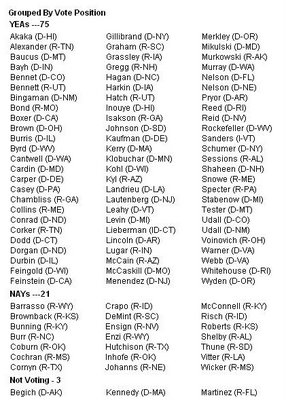 I don’t imagine that conservatives wanted to give the right to vote to blacks, or women. And I don’t imagine that they want to give it to the District. And, as happened with those fights, I’m certain that lots of un-related issues were thrown at the people who wanted to simply do the right thing on those issues. (I realize I’m mixing legislative and judicial decisions here, but it’s clear from the 200 year history of this country that that’s simply the way it goes.)
As long as the government is legislating our relationships, it’s absurd that some adult relationships are being afforded benefits that others are denied. And, gun control saves lives. And, the District should have voting rights. And, as long as I’m a citizen of this country: you don’t get to tell me that I don’t get to vote, you don’t get to tell me who to love, and you don’t get to tell me what to vote for.
So here’s the quiz for local folks working in the political realm, inside or outside of government: three wrongs make a ________. I know that in the political world it’s easy to get very involved in how this is all going to work, and to err on the side of caution. But as District residents can we please not pretend to be something we’re not? We’re liberal. They know it, and we know it. We should be who we are. Three wrongs don’t make a right.
As far as the politics of it all, I like this scenario: There’s no movement on voting rights, cause no one really cares. We pass Gay Marriage. The Representatives from the committee that oversee the District overturn it. There is mobilization and awareness raised around the country for home rule and gay marriage. We end up getting both. Democrats gain a seat, or two or three, in the House.
——————
Editor’s Note: I made a mistake in my assertions about the Congressional oversight process, and have been corrected. All legislation does not have to be approved by Congress. Here’s the deal on Congressional oversight:
All D.C. legislation must undergo a congressional review period, but Congress does not have to approve it for it to become law. Congress can vote to disapprove it, and if both houses of Congress do so it then goes to the President for his signature just lilke any other bill. But Congress does not have to take any action. Congress does have to pass D.C.’s annual appropriations bill–not just the federally funded portion, but the whole thing, including how we spend our own local tax revenue.
My thanks to RR for correcting my error. 5/15/09
 I usually get the clicker. I want to be clear about that. But sometimes I don’t. This evening F tuned us into a movie called ‘Mother Night’, right as it was starting. I’m really glad that she did.
 Orchestra. Her solo appearances include performances with the Boston Symphony Orchestra, Saint Louis Symphony Orchestra, Boston Pops, Boston Classical Orchestra, Alexandria Symphony, Virginia Chamber Orchestra, International Symphony Orchestra (Israel), and Corpus Christi Symphony Orchestra. Bar-Josef received her bachelor’s degree from The Curtis Institute, where she studied with Aaron Rosand and was the recipient of the Fritz Kreisler Award for Violin upon graduation. She continued her studies at the Julliard School with Robert Mann. Bar-Josef is a founding member of the Dryden Quartet, a group she formed with NSO Principal Violist Dan Foster and his cousins Nicolas and Yumi Kendall, and the Kennedy Center Chamber Players, which features leading members of the National Symphony Orchestra.
 what ever comes up. I didnt have any coaches. I knew what I wanted to do and could see myself doing it first, but I couldnt hear what it sounded like. I was really fascinated by the challenge of being on stage by myself, because singers more often than not, especially young singers as they are studying music, have a tendency to fall back on, or rely on an accompanist of some sort. And so theyre not self reliant in the beginning. I wanted to make sure that I was very strong in my voice and my technique so that any situation that I went into, regardless of what that was, whatever the ensemble was or whatever, I knew where I was at all times, because I could rely on myself to be wherever I was on stage musically with whoever I was with, instead of pacing my dressing room floor because my accompanist is caught in a snow storm, or the bands plane is delayed and Im the only one out there.